Materials
Skip to content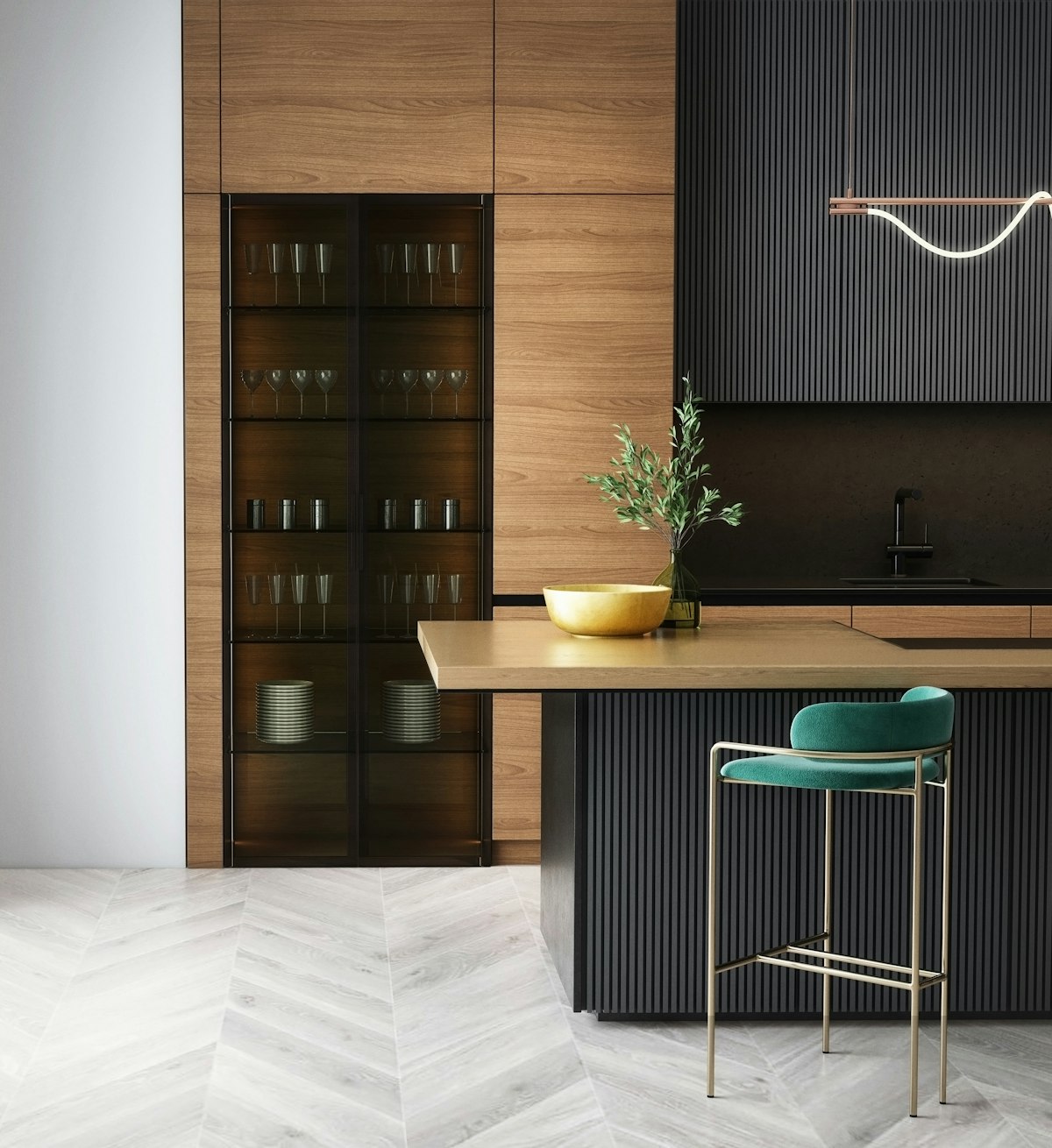 Book a Consultation
In an age of engineered panels and synthetic finishes, we keep returning to oak. Here's why solid timber remains the soul of a Lamont kitchen — and what it means for the home that holds it.
There is something about solid oak that no engineered board has ever quite replicated. Not just the grain, though the grain is beautiful. Not just the warmth, though the warmth is immediate and unmistakable. It's the honesty of the material — the fact that it came from a living tree, grew for decades, and carries the record of that growth in every ring.
When we build with oak at Lamont, we are not simply choosing a finish. We are choosing a material that will change with the home it lives in. Oak darkens subtly over the years, settling into a deeper, richer tone as it is exposed to light and air. A cabinet door fitted today will not look quite the same in ten years — and that is precisely the point. The kitchen grows older alongside the family that uses it, developing a patina that cannot be applied, only earned.
This is a different philosophy from the one that dominates much of the industry. The modern impulse is toward uniformity — boards that look identical today and in a decade, surfaces that resist every mark, finishes that promise to never change. There is a place for that. But there is also a place for materials that ask something of you, and give something back in return.
Solid oak asks for care. It asks to be oiled occasionally, to be kept away from standing water, to be treated as a living surface rather than an impervious one. In exchange, it gives warmth that no laminate can imitate. It gives the quiet satisfaction of a surface that has been touched, used, and loved. And it gives longevity — a well-made oak cabinet will outlast several kitchens built from cheaper materials, and it can be refinished rather than replaced when the time comes.
We source our oak from trusted British and European suppliers, and we are selective about what we accept. The grain must be tight and even. The moisture content must be stable. These are not glamorous details, but they are the difference between a door that stays flat for twenty years and one that warps in the first winter. Craftsmanship begins long before the workshop — it begins with choosing the right timber in the first place.
If you are considering oak for your kitchen, our advice is simple: touch it. Go to a showroom, run your hand across a finished surface, feel the difference between oiled oak and lacquered oak. The material will tell you whether it belongs in your home. In our experience, it usually does.
A kitchen built from solid oak is not the cheapest option, and we will never pretend otherwise. But it is the option most likely to still be standing, and still beautiful, when your children are grown. That is the quiet strength of timber. That is why we still build with it.